

The other day, I sat across from someone who said:
“I talk to people all day long, but I still feel emotionally alone most of the time.”
And honestly, I think many people quietly relate to that feeling right now.
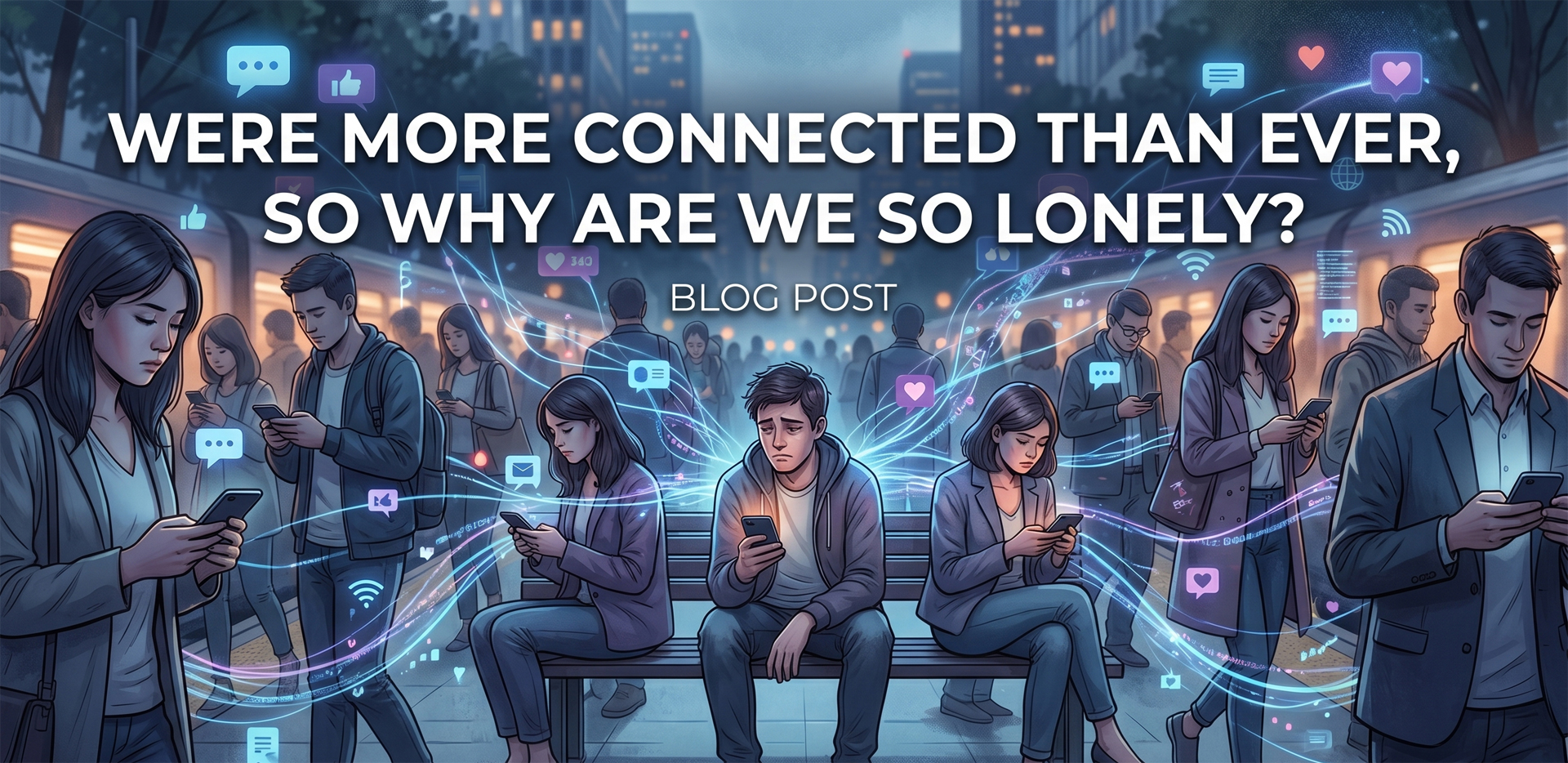
We live in a world where we are constantly connected. We text throughout the day, scroll social media, listen to podcasts about healing and relationships, consume endless self-help content, and can reach people at any moment with the tap of a screen.
Yet beneath all of that connection, many people still feel unseen, emotionally disconnected, overwhelmed, or deeply alone.
Not because they’re failing.
Not because they’re broken.
But because human beings were never meant to survive on information alone.
We are wired for emotional connection, safety, attunement, and presence. And so many nervous systems today are running on depletion rather than true connection.
Sometimes what people are craving most isn’t more advice.
It’s the experience of feeling emotionally safe enough to finally exhale.
The Difference Between Communication and Connection
One of the things I notice often in therapy is that many people are communicating constantly, but not necessarily connecting deeply.
Partners discuss schedules, responsibilities, bills, kids, logistics, and day-to-day stressors. Friends send memes, react to stories, and check in through quick messages. Many people stay “busy” socially while still carrying an underlying feeling of loneliness.
Because connection is about more than proximity or conversation.
True connection happens when we feel:
- emotionally seen
- understood
- accepted
- safe enough to be vulnerable
- able to show up without performing
And for many people, that kind of emotional safety has been difficult to access for a long time.
I think this is part of why so many people feel exhausted right now. Not just physically tired, but emotionally fatigued from constantly functioning, producing, managing, and coping without enough spaces where they feel deeply supported.
So many people are carrying so much internally while still appearing “fine” on the outside.
Loneliness Is More Than an Emotion – It’s a Nervous System Experience
As humans, we are biologically wired for connection.
Our nervous systems are deeply relational. Safety is not only something we think about cognitively – it is something we experience in the body.
When people feel chronically disconnected, emotionally isolated, or unable to fully be themselves in relationships, the nervous system can begin operating in survival states for long periods of time.
For some people, this looks like anxiety:
always overthinking, over-functioning, or feeling unable to rest.
For others, it may look like numbness, emotional shutdown, irritability, disconnection, or feeling detached from themselves and others.
Many high-functioning people are silently living in chronic nervous system activation without realizing it.
And while insight is valuable, healing often requires more than simply understanding why we feel the way we do.
Healing frequently happens through experiences of safe connection.
Through slowing down.
Through being witnessed.
Through relationships that allow us to feel less alone inside our own experience.
Sometimes the body begins to soften not because someone finally found the “right answer,” but because they no longer feel like they have to carry everything by themselves.
Why Relationships Matter So Much in Healing
One of the most powerful parts of therapy is not just the tools or techniques themselves.
It’s the experience of being met with presence, compassion, curiosity, and care.
Many people have spent years feeling misunderstood, emotionally dismissed, disconnected, or afraid to fully express themselves. Over time, this can shape how safe it feels to trust others, communicate needs, or remain emotionally open in relationships.
This is why relationship-focused work can be so transformative.
Whether through individual therapy, couples counseling, group experiences, breathwork, or ketamine-assisted psychotherapy (KAP), healing often unfolds in spaces where people begin experiencing:
- emotional safety
- nervous system regulation
- deeper self-awareness
- authentic connection
- co-regulation and support
Often, the goal is not perfection.
It’s helping people feel more connected to themselves, their emotions, and the people they love.
Because when we feel emotionally supported, the nervous system doesn’t have to work so hard to stay protected all the time.
Small Ways to Rebuild Connection
Healing connection doesn’t always begin with dramatic life changes.
Sometimes it begins with small moments of presence.
A deeper breath during a difficult conversation.
Making eye contact instead of multitasking.
Saying, “I’m struggling right now,” instead of pretending everything is okay.
Allowing ourselves to receive support instead of automatically carrying everything alone.
Sometimes healing begins by slowing down enough to notice what we actually need emotionally.
- Not more productivity.
- Not more information.
- But more safety.
- More honesty.
- More connection.
You Don’t Have to Navigate It Alone
If you’ve been feeling emotionally disconnected, overwhelmed, anxious, or alone lately, you are not the only one.
Many people are quietly longing for deeper connection – to themselves, to others, and to a life that feels more grounded, present, and emotionally fulfilling.
At The Center of Connected Living, we offer individual therapy, couples counseling, ketamine-assisted psychotherapy (KAP), and integrative healing experiences designed to support emotional connection, nervous system healing, and lasting transformation.
Healing doesn’t happen through perfection.
It happens through safe connection, support, and the willingness to begin.
If you’d like to learn more or schedule a consultation, we’d be honored to support you.